
What Support Workers Should Be Writing Down (And Why Most Don’t)
If you are a support worker in New Zealand, you are probably doing one of the most important jobs in someone’s life. You are also probably doing almost no formal documentation of it.
This is not laziness. It is not negligence. It is a structural problem.
Most support workers are not given a system for recording what happens during a shift. Some agencies have paper forms. Some have apps that are designed for the agency’s needs, not the family’s. Many workers keep nothing at all – not because they don’t care, but because no one ever showed them what good notes look like or why they matter.
This guide is for support workers who want to do better. And for families who want to understand what to ask for.
Why documentation matters more than you think
When a support worker finishes a shift and walks out the door, everything they observed leaves with them unless it’s written down.
That observation, hat the person they support seemed more anxious than usual, or ate well for the first time in a week, or made unexpected progress with a task is clinical information. It is the kind of detail that shapes funding decisions, informs therapists and GPs, and tells a NASC assessor what daily life actually looks like.
Without it, families are left to reconstruct patterns from memory. Assessors are left to make decisions based on a single meeting rather than months of real data.
What good support worker notes actually look like
The most useful notes are specific, observed, and time-stamped. They do not need to be long.
- Behaviour and mood. Note any changes from the person’s baseline. Not “seemed off” but “was non-verbal for the first hour, which is unusual.” Not “had a good day” but “initiated three separate conversations, unprompted.”
- Physical health observations. Appetite, sleep if reported, mobility, any physical complaints mentioned. If something looks different, note it.
- Activities completed and how. Did they engage with the planned activity? Did they resist? Did they do something independently that required prompting last week? These progressions matter.
- Incidents and near-misses. Anything that required intervention, redirection, or de-escalation. Even small incidents that resolved quickly should be recorded.
- Handover notes. Anything the next support worker or family member needs to know before they start.
The problem with WhatsApp and verbal handovers
Most support worker communication in NZ happens informally, a message in a group chat, a quick word at the door, a voice note. This is human and understandable. It is also a documentation black hole.
When a funding review happens six months later, those messages are gone. The handover conversation is long forgotten. The family is left trying to remember what happened and when.
A shared care diary changes this. When support workers log observations in a centralised system, one the family can also see. Nothing is lost between shifts. Patterns emerge. Progress is visible. And when review time comes, the record is already there.
How to introduce this to the families you work with
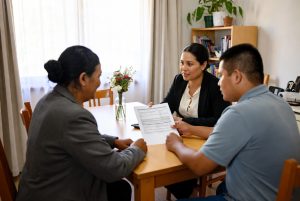
If you are a support worker who wants to start documenting properly, the conversation with the family is usually straightforward. You are not asking them to monitor you. You are offering to contribute to a shared record that protects everyone, the person being supported, the family, and you.
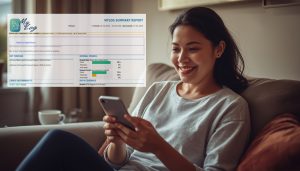
A care diary like MyLog lets support workers add entries from their phone. It takes around three minutes per shift. The family can see the entries in real time. And if anything ever needs to be escalated or evidenced, the record is already there. Start with one entry per shift. Just the basics. After a few weeks, the pattern of what to notice becomes second nature.
A note for families
If you are employing a support worker, directly or through an agency, it is reasonable to ask how care is being documented. Not as an accusation, but as a standard expectation. Good documentation protects your whānau member. It also protects your support worker, by creating a record of what they observed and how they responded.
A shared system makes this easy for everyone.